 Skip to content

How a dimensioning and weighing system
lowers shipping costs
Logistics and warehousing companies are finding shipping costs to be one of the most challenging expenses to control, as carriers, packaging providers, and fuel surcharges are driving shipping costs up.
However, many companies fail to acknowledge that a big part of shipping costs is self-inflicted. In most cases, the hidden reason is inaccurate parcel dimensions and weight.
This is exactly where a dimensioning and weighing system comes into play.
What is a dimensioning and weighing system
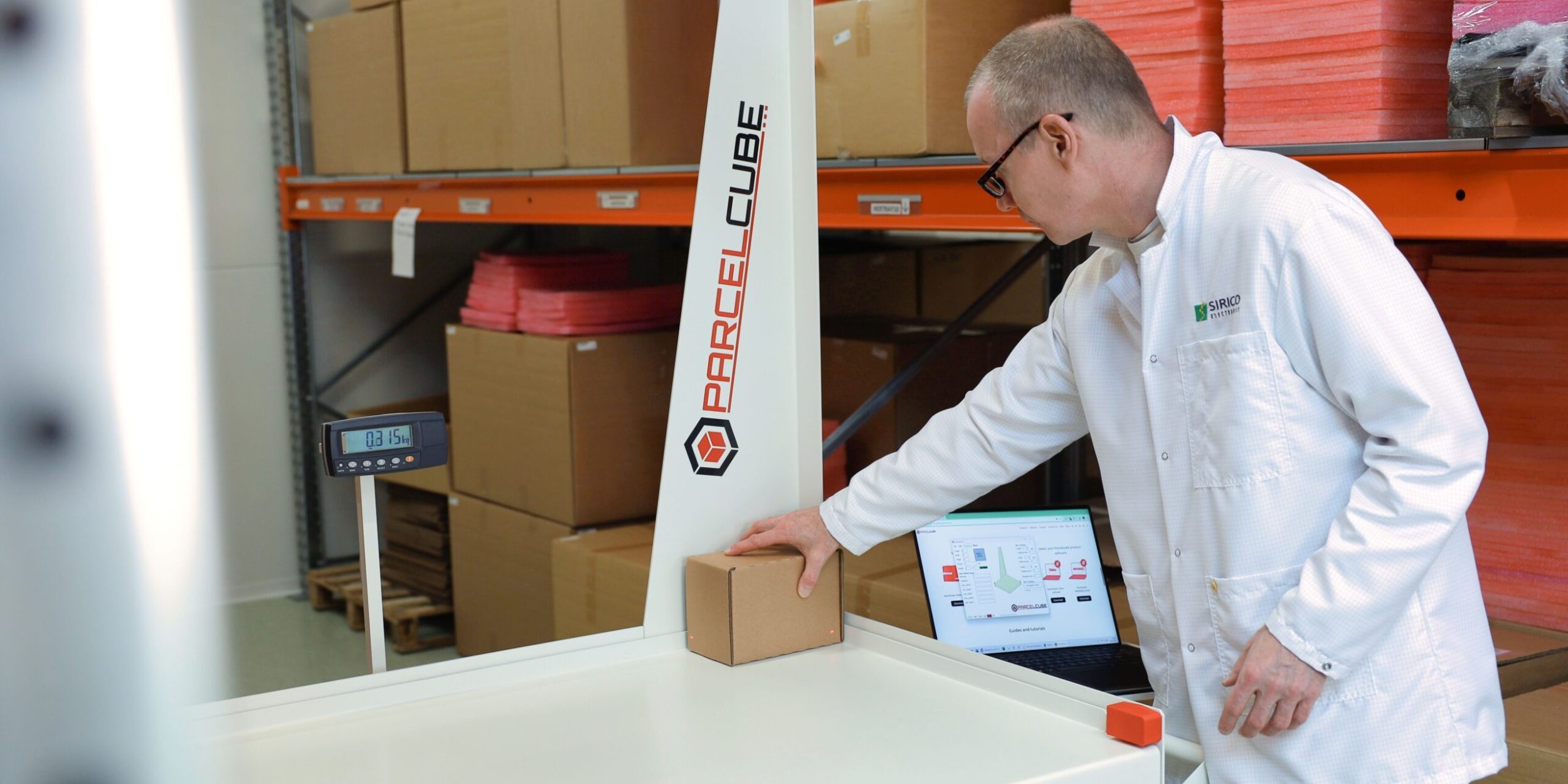
A dimensioning and weighing system automatically captures the length, width, height, and weight of parcels and irregularly shaped items.
As a result, the system eliminates guesswork from measurement and functions either as a standalone dimensioning device or as an integrated system. Measurement and weight data is transferred in real time to your Transport Management System (TMS), Warehouse Management System (WMS), or Enterprise Resource Planning (ERP) system. This results in significant gains in efficiency and cost reduction.
Why are shipping costs higher than expected
Most carriers calculate shipping costs based on dimensional weight. This means that instead of the actual weight, carriers charge companies based on how much space the parcel takes up in a truck, plane, or container.
The problem arises when companies measure parcels manually, estimate numbers, or round them up, because even a few centimeters change between actual and declared volume can move the parcel into a higher pricing tier.
While this may not seem like a huge problem for a single shipment, these numbers add up very quickly.
How a dimensioning and weighing system reduces shipping costs
1. Accurate dimensions and weight lead to accurate carrier billing
The easiest and most obvious solution to the problem is to have accurate master data from the beginning.
With a dimensioning and weighing system you get:
- Less billing adjustments, making costs also more predictable
- Less time spent on disputes and more time spent on impactful work
- Lower shipping costs that inevitably lead to higher profit
2. Less “shipping air” with better fitting boxes
Many warehouses ship parcels that contain unnecessary room because box sizes are chosen based on estimates.
Correct master data allows warehouses to:
- Choose boxes that are a better fit for the items
- Reduce excess room in the parcel
- Lower the overall volume of the parcel
3. Fewer manual errors
During the busiest periods, manual measuring can become rushed, which leads to mistakes:
- Items are measured inconsistently
- Measurements get rounded up
- Different employees measure different results
Final thoughts
Shipping costs are not determined only by carriers. We can have a major impact on the final cost if we are able to provide quality master data. A dimensioning and weighing system is the most helpful and simple tool to achieve that.
By removing guesswork, eliminating errors, and aligning declared data with carrier calculations, warehouses can significantly reduce shipping costs without renegotiating contracts or changing carriers.
If you are ready to decrease your shipping costs, contact us for more information.