 ES
ES
 FR
FR
 IT
IT
 FI
FI
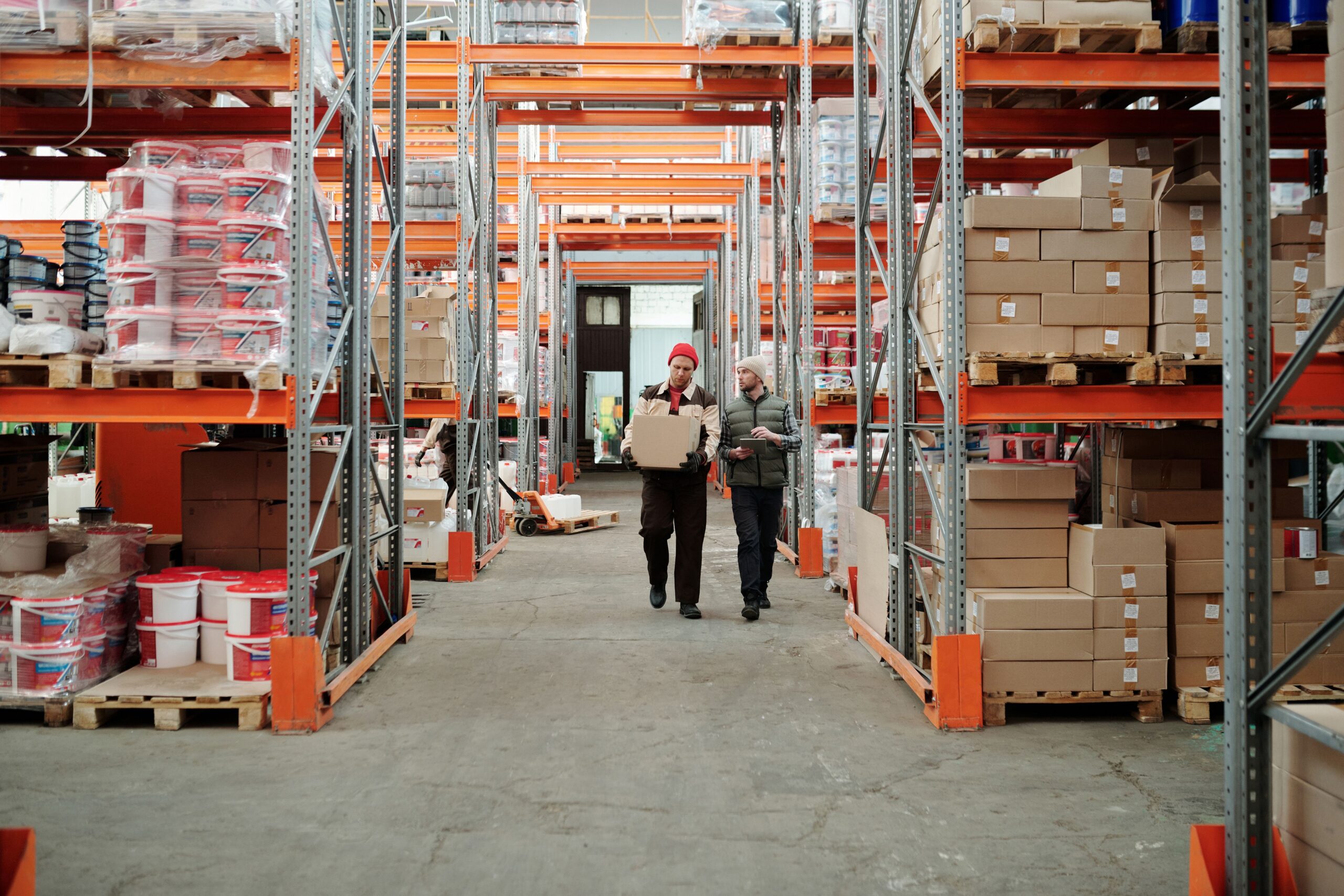
There isn’t a magic number of SKUs or shipments where manual measuring stops making sense. Instead, warehouses gradually reach a point where tape measures become a bottleneck rather than a tool.
Every big player has started from somewhere. For a small operation, a tape measure and a scale is a perfect solution that helps to optimize costs. You get more-or-less accurate data for the operations you need, and with small volumes, the cost of mistakes is manageable.
However, as order volumes grow, product ranges expand, and all other warehouse systems become more advanced, these mistakes, that initially seemed small, compound into considerable costs.
The problem is that many warehouses don’t notice it happening, as growth is typically gradual. Issues, such as rising shipping costs, insufficient storage space, and packing inefficiencies tend to grow more-or-less the same speed, and can look like a natural side effect of growth.
Once companies take a closer look into these areas, they may be negatively surprised by how much money is quietly being wasted.
What are cubing systems?
Cubing systems are most commonly used in e-commerce, logistics, 3PL, retail and distribution operations where accurate dimensional data is needed for storage, packing, shipping or maintaining product master data.
In essence, cubing systems capture dimensional data of a product or box, i.e., length, width, height, and weight.
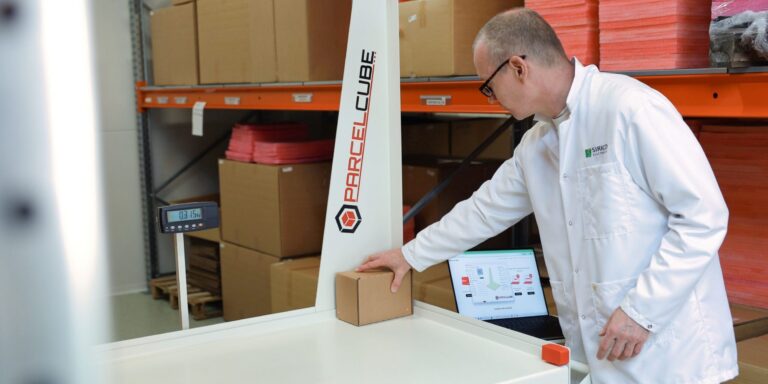
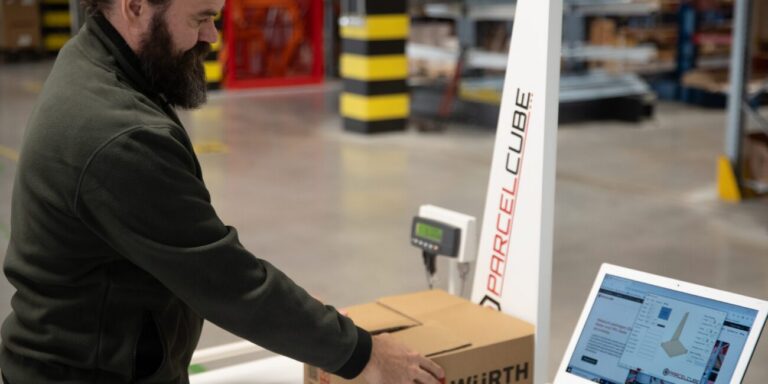
Instead of an employee measuring each side manually, writing down the results and entering them into a system, the item is placed on the dimensioner and its data is captured automatically.
Many modern cubing systems then transfer all this accurate master data into their existing WMS, ERP, TMS, or shipping systems.
Why do warehouses move from manual measuring to cubing systems?
As discussed in the introduction, manual measuring is not necessarily a bad process. It all depends on the size and scale of the operation. For many smaller operations, a tape measure and a scale is more than enough.
The problem starts when a process that worked perfectly well for 100 products suddenly has to handle 10,000, because growth magnifies small inefficiencies.
Spending 21 seconds to measure a few parcels manually is hardly a problem. But when your team handles thousands of items, cutting that time to around one second can save hours of repetitive work every day.
The same applies to carrier adjustments. One occasional correction due to inaccurate dimensions may not raise any alarms. But when carriers regularly adjust invoices across thousands of shipments, shipping costs become harder to predict and the extra fees start eating into your profits.
Even running out of warehouse space doesn’t always mean you need a bigger warehouse. You may simply not use your existing space efficiently. Give your WMS accurate dimensions for every product, and it can recommend the most suitable storage locations and help you make better use of the space you already have.
This is where cubing systems become valuable. They allow warehouses to capture accurate data consistently, without letting the time and labour spent on measuring grow alongside the business.
5 signs your warehouse may need a cubing system
-
Measuring is taking up more and more employee time
A process that took little time at lower volumes can become hours of repetitive work as your SKU range and order volumes grow. Furthermore, employees may regularly remeasure products because dimensions are missing or they do not trust the existing data. This means they spend valuable working time solving the same problem repeatedly.
-
You’re running out of warehouse space without a clear reason
Insufficient storage space doesn’t always mean you need a bigger warehouse. If your WMS doesn’t know the exact dimensions of your products, it cannot calculate where they fit best. This often leads to poorly used shelves and empty space between products.
-
Carrier adjustments are becoming a regular occurrence
Carriers calculate shipping charges using the dimensions and weight you provide. If their measurements don’t match yours, they may correct the shipment and adjust the final charge. One occasional adjustment may not matter much, but when it happens regularly across thousands of shipments, the extra fees add up and make shipping costs much harder to predict.
-
Packers are relying on estimates and oversized boxes
Under pressure, employees naturally find ways to keep things moving. With manual measuring, that may mean rounding 29.7 cm to 30 cm. And when packers don’t know the exact product dimensions, they often choose a bigger box just to be safe.
Neither seems like a big problem on its own. But across thousands of SKUs and shipments, these small decisions add up to inaccurate master data, wasted packaging, unnecessary empty space and higher shipping costs.
-
Your WMS or ERP is making decisions with incomplete data
Your software is only as good as the data you give it. You may have invested heavily in warehouse software, but it can only work with the information you give it. Missing or estimated dimensions affect storage, packaging and shipping decisions throughout the operation.
What does a cubing system actually improve?
The biggest benefit of a cubing system is what accurate dimensional data allows the rest of the warehouse to do.
Accurate dimensional data means better cost control and a warehouse that can grow more efficiently. Your WMS or ERP can use reliable master data to make smarter storage and packing decisions, while accurate measurements help reduce carrier corrections, wasted packaging and unnecessary shipping costs.
For employees, a cubing system makes everyday work easier. They spend less time measuring products by hand, rechecking dimensions or guessing which box will fit. As volumes grow, the same team can handle more without the workload growing with it, leaving more time for tasks that actually need their attention.
The operation becomes easier to scale because decisions rely less on guesswork and more on actual data.
Static vs automated cubing systems
Not every warehouse needs a fully automated dimensioning line.
High-throughput operations may use dynamic cubing systems integrated into conveyor lines, where parcels are measured while moving through the facility.
For many small and medium-sized warehouses, a static cubing system offers a much simpler alternative. An operator places an item on the system, its dimensions and weight are captured, and the information is transferred to the relevant software.
Static systems require considerably less infrastructure and can usually be added to an existing receiving, packing or shipping station without redesigning the warehouse.
What to look for when choosing a cubing system
Start by looking at your own operation. What do you measure, how much do you measure, and where does measuring fit into your workflow? A pharmaceutical company handling thousands of small items has very different needs from a warehouse measuring large cartons or a retailer working with irregular-shaped products.
Your measurement volume matters too. A warehouse measuring a few hundred items at a workstation may benefit from a simple static cubing system. An operation processing thousands of parcels may need a higher level of automation.
It is also worth considering:
- What product sizes and shapes does the system handle?
- Can it capture dimensions and weight together?
- Does it integrate with your existing WMS, ERP or TMS?
- How much infrastructure does it require?
- Do you need additional software?
- Are there mandatory recurring fees?
- How much maintenance does it require?
- Can you replace or upgrade components as your needs change?
The right cubing system should fit naturally into your operation and make everyday work simpler, rather than adding another complicated process for your team.
Parcelcube cubing systems
Parcelcube offers a range of cubing systems designed for warehouses, 3PLs, logistics companies, retailers and e-commerce operations.
Different models are available for different measurement needs, from small products and standard boxes to larger and irregularly shaped items.
Parcelcube systems capture dimensions and weight in under a second with measurement accuracy of up to 0.1 cm. The data can be transferred directly to WMS, ERP, TMS, e-commerce and shipping systems.
Parcelcube software is included free of charge, with no recurring software fees. Our systems are designed and manufactured in Finland and are already used by companies in more than 40 countries.
When is the right time to invest in a cubing system?
You do not necessarily need to wait until manual measuring becomes a major bottleneck.
The first signs are often much smaller. Employees start rounding measurements, products need to be remeasured, oversized boxes become common, or your WMS contains dimensional data nobody completely trusts.
A cubing system allows you to solve the problem at the source. Capture accurate data once and let the rest of your warehouse work from it.
If your warehouse is starting to outgrow manual measuring, contact Parcelcube or find your local Parcelcube representative to discuss which cubing system best fits your operation.